
Longevity & Precision Health
Where the science stands:

Opportunities

Translate validated biomarkers into preventive and personalized care

Guide earlier, targeted interventions across the life course to delay or prevent disease

Improve efficiency and outcomes by reducing late-stage treatment reliance
Key challenges

High cost and complexity of multi-omics technologies

Limited standardization and clinical validation pathways

Integration of complex biological data into routine care
Digital Health & AI
Where the science stands:

Opportunities

Enable proactive risk prediction and early intervention

Scale remote and hybrid care models

Improve system efficiency through data-driven decision support
Key challenges

Data privacy, security, and governance requirements

Risk of algorithmic bias and lack of transparency

Ensuring fair access and accountability in AI-driven decision making
Health System Resilience & Sustainability
Where the science stands:

Opportunities

Embed predictive analytics into preparedness and system planning to improve timely access to essential services

Strengthen early warning and response mechanisms across health and environmental domains, including underserved and high-risk populations

Build workforce models and new health roles that support adaptive, data-enabled care delivery across diverse settings and resource levels
Key challenges

Fragmented data and infrastructure that limit continuity of care and equitable access

Workforce capacity constraints and skills mismatches, particularly in primary care and low-resource contexts

Difficulty translating multi-source sensing into timely operational action that reaches all populations, not only those already well served
Invest in Life Sciences
Where the science stands:

Opportunities

Accelerate translation from scientific discovery to real-world health impact

Support integrated data, research, and innovation ecosystems

Enable broader and more equitable access to high-impact diagnostics and technologies by catalyzing collaboration across public, private, and philanthropic sectors
Key challenges

Regulatory complexity and lengthy development and approval processes vs speed of innovation

Uneven access to capital, infrastructure, and innovation capacity across regions

Misalignment between investment incentives and long-term preventive health outcomes




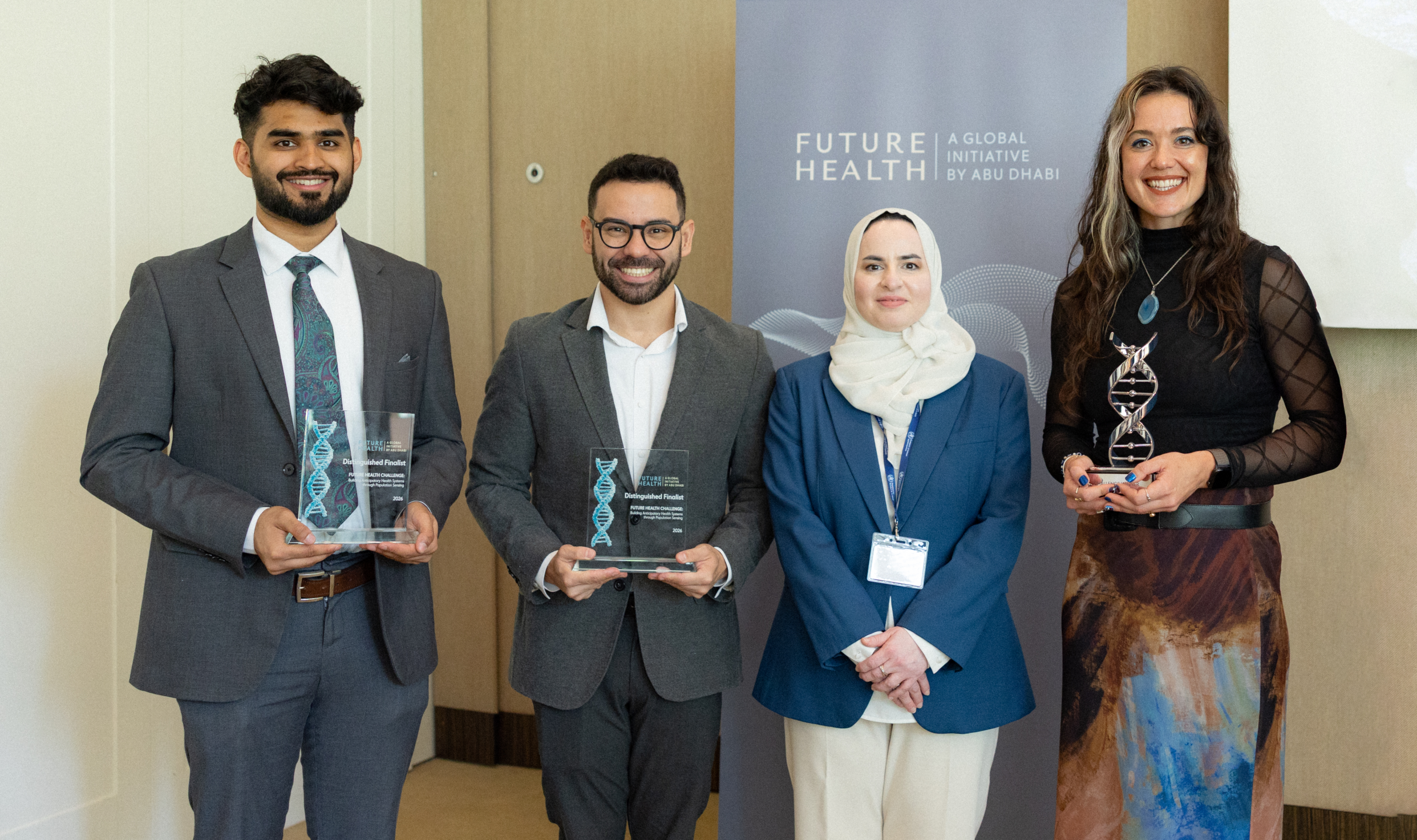
Meet the Winners of the Future Health Challenge 2026
Winning teams were recognised from the inaugural ‘Future Health Challenge 2026: Building Anticipatory Health Systems through Population Sensing’, delivered by Future Health – A Global Initiative by Abu Dhabi in collaboration with MIT Solve.
Their solutions address critical challenges in early detection, continuous population insight, and more timely decision making, signalling a shift in health systems from late-stage treatment to earlier intervention.
The Future Health Challenge is part of a year-round programme of activities designed to identify and champion high-potential talent globally, and connect innovators with funding, partnerships and pathways to scale solutions that advance longer, healthier lives.