Join us at Abu Dhabi Future Health Summit 20-22 October 2026

Future Health Becomes Founding Member of MIT-Led BioConvergence Cancer Alliance

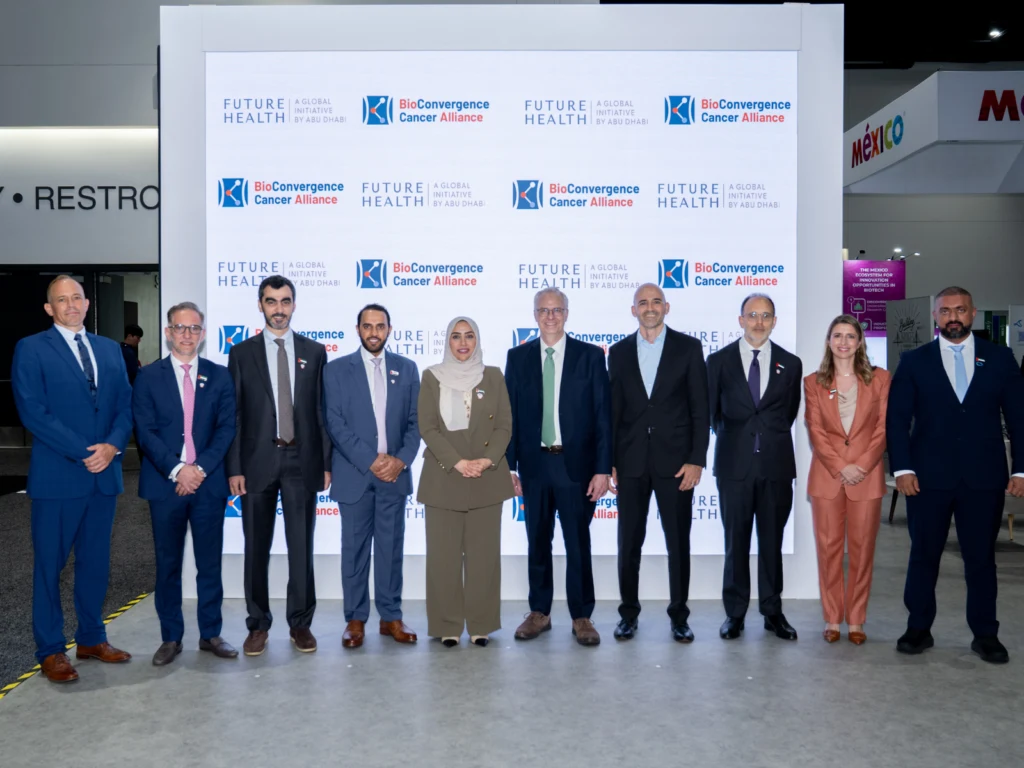
(Media Alert: 7 July 2026): Future Health – A Global Initiative by Abu Dhabi announced that it has joined the BioConvergence Cancer Alliance as a Founding Member. Established by the Koch Institute for Integrative Cancer Research at the Massachusetts Institute of Technology (MIT), the Alliance brings together leading organisations committed together with academia to accelerate progress in cancer care, research and innovation.

The announcement, which took place on the sidelines of BIO International Convention 2026 in San Diego, marks a significant step in strengthening collaboration between the world’s leading cancer research institutions and Future Health’s ecosystem.

Increasingly, progress against complex diseases such as cancer is being driven through collaborations with healthcare and government organisations, researchers, innovators, and industry partners joining forces to share expertise, accelerate scientific discovery, and translate research into actionable real-world impact.  

While cancer remains a leading cause of deaths worldwide, approximately 38% of cancers can currently be prevented by avoiding risk factors and implementing existing evidence-based prevention strategies, with additional lives saved through early detection.

As a Founding Member of the Alliance, Future Health will support efforts to strengthen international collaboration and foster growth in areas including cancer research, precision medicine, artificial intelligence, and next-generation healthcare technologies.

The collaboration reflects growing recognition that tackling cancer requires greater cross-sector work to accelerate innovation and improve patient outcomes. Future Health – A Global Initiative by Abu Dhabi is a platform for global collaboration that convenes stakeholders across policy, research, investment and industry to accelerate collaboration, advance innovation and shape the future of health systems.

The collaboration also highlights the increasing role the Middle East region plays in advancing global healthcare innovation, with Abu Dhabi continuing to invest in research, life sciences and partnerships that are designed to support the development of future-ready health systems.

Future Health Releases Inaugural Whitepaper Showcasing Abu Dhabi’s Blueprint for Longevity-First Health Systems

  • The inaugural Abu Dhabi Blueprint explores how Abu Dhabi is building a longevity-first health ecosystem focussed on extending healthy years of life through precision medicine, AI, and prevention.
  • The whitepaper supports Future Health – A Global Initiative by Abu Dhabi’s mission to accelerate global innovation across longevity and precision health, one of its core thematic focus areas.
  • Unveiled on the sidelines of BIO International Convention 2026, the report shared Abu Dhabi’s approach to longevity and health innovation with a global life sciences audience.

Abu Dhabi, United Arab Emirates, 24 June 2026 – Future Health – A Global Initiative by Abu Dhabi has released a new whitepaper titled “The Future of Longevity: Extending Healthspan – How Abu Dhabi is building a longevity-first health ecosystem”, and is focused on one of the defining global health challenges of our time: how to help people live longer, healthier lives.

Launched at the Future Health Dialogue held on the sidelines of the BIO International Convention 2026 in San Diego, the whitepaper highlights how breakthroughs in genomics, biomarker monitoring, artificial intelligence, and precision medicine hold the potential to bridge the gap between lifespan and healthspan – the number of years lived in good health.

Health systems worldwide are facing a growing challenge. While people are living longer, those additional years are not always lived in good health. Globally, up to 27% of additional years of life can be lived in poor health. In the UAE, non-communicable diseases account for approximately 55% of deaths and impose an estimated annual economic cost of AED39.9 billion, equivalent to 2.7% of the UAE’s 2019 GDP.

Against this backdrop, the whitepaper presents Abu Dhabi’s longevity-first model as a practical framework for prevention, prediction, and personalised care. It identifies four interconnected areas that can help health systems extend healthspan: precision longevity medicine, regenerative and advanced therapeutics, citizen empowerment, including tools and environments that support healthier daily choices, and ecosystem and innovation infrastructure.

Her Excellency Dr Noura Khamis Al Ghaithi, Undersecretary of the Department of Health – Abu Dhabi, said: “We are at a pivotal moment for the future of health. Advances in science, data, and technology are opening new possibilities not simply to extend life, but to extend the number of years people live in good health. The opportunity now is to ensure that health systems are ready to translate these advances into meaningful outcomes.”

“Abu Dhabi’s strength lies in the way it connects policy, data, genomics, clinical innovation, and investment within one health ecosystem. Through this whitepaper, Future Health is sharing our approach with the world, and contributing practical insights that can help the next generation of health systems become more predictive, preventive, and personalised,” she added  

The report highlights existing national infrastructure within Abu Dhabi’s health ecosystem, including the Emirati Genome Programme with its ambition to sequence one million genomes, and Malaffi, Abu Dhabi’s health information exchange connecting more than 2,700 healthcare providers.

Beyond healthcare infrastructure and scientific innovation, the whitepaper argues that extending healthy years of life will depend on empowering citizens to take a more active role in managing their health.

New consumer data revealed in the whitepaper also shares that the foundations for this shift are already emerging across the GCC. According to EY research, 61% of respondents use wearable devices to monitor their health, and 55% said AI-based information had prompted them to seek care earlier. These findings reflect the growing shift towards predictive health, aligning with Future Health’s 2026 theme, ‘To Sense is to Predict’, which explores how earlier insights can enable earlier intervention and better health outcomes.

Fadi Smeirat, EY MENA Healthcare Life Sciences Consulting Leader, said: “Health systems around the world are faced with the same challenge: how to ensure longer lives are also healthier lives. What makes Abu Dhabi particularly compelling is the way that it brings together policy, data, genomics, clinical innovation and investment into a single ecosystem. This whitepaper highlights how these capabilities can work together to support a more predictive and personalised approach to healthcare.”

Developed by Future Health and its Partners, in collaboration with EY, the whitepaper advances Future Health’s mission to accelerate global innovation across longevity and precision health, one of its core thematic focus areas.

The Future of Longevity whitepaper forms part of Future Health’s Abu Dhabi Blueprints, a series examining the future of health through areas of emerging expertise and innovation in Abu Dhabi. The themes explored in the whitepaper will be advanced through Future Health’s year-round programme, and at the Abu Dhabi Future Health Summit, taking place from 20 to 22 October 2026.

The full whitepaper can be downloaded here.

Future Health Challenge awards USD 300,000 to early detection and population health sensing tools on sidelines of World Health Assembly

Global teams recognised in the Future Health Challenge for solutions designed to detect health risks earlier and support faster health system decisions

  • Future Health – A Global Initiative by Abu Dhabi and MIT Solve announce the winners of the inaugural Future Health Challenge
  • Winning solution equips frontline health workers in low-resource settings with mobile clinical decision-support tools, enabling earlier detection and more effective care delivery
  • Teams competed for a USD 200,000 grand prize and two USD 50,000 runner-up awards on the sidelines of the 79th World Health Assembly in Geneva
  • Winners recognised for solutions advancing anticipatory, data-driven health systems

Geneva, Switzerland, 22 May 2026: Three global teams developing early detection and real-time population health monitoring solutions have secured a total of USD 300,000 on the sidelines of the 79th World Health Assembly. The winning solutions address critical challenges in early detection, continuous population insight and more timely decision making, signalling a shift in health systems from late-stage treatment to earlier intervention.

Selected from 393 submissions across 68 countries, the winning teams were recognised through the inaugural ‘Future Health Challenge 2026: Building Anticipatory Health Systems through Population Sensing’, delivered by Future Health – A Global Initiative by Abu Dhabi in collaboration with MIT Solve.

Health systems globally are facing rising costs and persistent delays in diagnosis, with many conditions still identified only after symptoms become severe. At the same time, access to prevention remains unequal, with underserved communities often facing the greatest barriers to early screening and timely care, as well as reliable health information. The Future Health Challenge focused on solutions designed to detect health risks sooner, monitor population-level data, and support faster decision-making by health authorities.

Five finalist teams presented their solutions to an international audience spanning global health, philanthropy, investment, technology and life sciences, with the judging team awarding prizes to the following teams:

  • ThinkMD, Australia
    USD 200,000, Winner
    ThinkMD equips frontline health workers with mobile clinical decision-support tools that improve triage, treatment, and referral, while turning routine care encounters into real-time population health signals. The platform is already used by more than 9,000 frontline workers across 885 facilities, with the platform’s ability to act as an early warning system demonstrated through previously detected symptom patterns preceding a cholera outbreak in Zambia.
  • Vector Control Innovations, United States
    USD 50,000, Distinguished Finalist
    VectorCam uses AI-enabled mosquito surveillance to detect changing vector risks earlier, helping health systems target interventions before outbreaks escalate. Field evaluations of VectorCam’s impact have shown clear improvements in both efficiency and data quality, with evaluations showing data completeness increasing from around 60% to over 90%.
  • Huna, Brazil
    USD 50,000, Distinguished Finalist
    Huna applies AI to routine blood test data to identify people at elevated cancer risk earlier and guide them into appropriate screening and care pathways. In Brazil, its pilots have screened more than 500,000 patients, and across all deployments to date, hundreds of cancer cases have been detected, many of which would likely have been found later when treatment is more complex and expensive.

Delivered in collaboration with MIT Solve, the Future Health Challenge is part of Future Health’s year-round programme of activities designed to identify and champion high-potential talent globally, connecting innovators with funding, partnerships and pathways to scale solutions that advance longer, healthier lives.

Dr. Jackie Rabec, Co-Founder of ThinkMD, said: “We are thrilled to be the recipients of this award, and we are excited to be able to use it to scale our impact. Our next stage of growth will be expanding in priority markets across Nigeria, Rwanda, Uganda and Somalia, validate our next generation multimodal conversational interface and furthering our self-care product to deliver health intelligence into the hands of citizens”.

Dr. Asma Al Mannaei, Executive Director of the Health and Life Sciences Sector at the Department of Health – Abu Dhabi, said “Too often, health systems only detect risk once it has become illness, when treatment is more complex and outcomes are worse. Solutions from the Future Health Challenge are designed to identify risk earlier and support more timely decisions at a population level. The priority now is testing and scaling what works in real-world settings.”

Hala Hanna, Executive Director of MIT Solve, said: “The solutions emerging from this Challenge reflect both the urgency and the opportunity facing health systems globally. By bringing innovators together with policymakers, funders and implementers through platforms such as Future Health, we can help accelerate solutions that are locally grounded and capable of delivering impact at scale.”

MIT Solve has more than a decade of experience in delivering global innovation challenges across health, climate, learning and economic prosperity. To date, MIT Solve has mobilised over USD 80 million in funding for innovators worldwide, with supported solutions reaching more than 370 million lives.

The Challenge forms part of Future Health’s purpose to identify and support innovations that improve health outcomes. Beyond prize funding, participating teams will be connected to partners, investors and health authorities to support the next phase of development and adoption.

Representatives from finalist, semi-finalist and selected Honourable Mention teams will also be invited to showcase their innovations at the Abu Dhabi Future Health Summit, taking place from 20 to 22 October 2026.

Future Health continues to advance a year-round programme across longevity and precision medicine, intelligent health and AI, health system resilience and sustainability, and investment in life sciences, to empower better health worldwide. The platform will continue to introduce new opportunities for global collaboration and discovery of impactful solutions throughout the year.

For more information about the Future Health Challenge and upcoming programme milestones, visit www.futurehealthinitiative.ae⁠

Future Health – A Global Initiative by Abu Dhabi and MIT Solve Announce Global Future Health Challenge Finalists Driving the Shift to Anticipatory Health Systems

  • Future Health – A Global Initiative by Abu Dhabi and MIT Solve announce five finalists in the Future Health Challenge 2026
  • 393 submissions from 68 countries reflect growing global momentum  towards predictive, population-based healthcare
  • The Five finalists will present at the World Health Assembly in Geneva, competing for a total of USD 300,000

Abu Dhabi, UAE, 08 April 2026: As health systems worldwide face rising pressure from chronic disease, ageing populations and limited access to early detection, Future Health – A Global Initiative by Abu Dhabi has announced the five finalists for the Future Health Challenge: ‘Building Anticipatory Health Systems through Population Sensing’. 

The competition, launched by Future Health in February 2026 in collaboration with MIT Solve, provides a platform to discover high-potential solutions from global innovators to advance earlier detection of health risks, continuous population insight, and grow and scale more anticipatory, data-driven models of care. Future Health – A Global Initiative by Abu Dhabi is a year-round platform for global collaboration and transformative health innovation, uniting science, policy, innovation, and investment to create accessible, resilient health systems.

With 393 submissions from across 68 countries, the Challenge reflects growing global momentum towards predictive and preventive approaches to health. The range of applications highlights a diverse and evolving landscape of innovation, spanning geographies, sectors and contexts. Following a multi-stage evaluation process, including virtual pitches and live Q&A sessions with ten semi-finalists, the final five teams were selected for their ability to translate complex data into actionable health insight and demonstrate relevance across a variety of health system settings.

The selected finalists reflect the breadth of innovation shaping the future of anticipatory health, spanning five continents and a mix of scalable approaches:

  • SOIK Corporation (Japan), SPAQ, a community-led model using AI to detect maternal risk in fragile settings
  • Huna (Brazil), Huna Cancer Navigator, applying AI to routine blood data to support early cancer detection and patient engagement
  • ThinkMD (Australia), a digital platform enabling better frontline care and generating real-time public health intelligence
  • Vector Control Innovations (United States), VectorCam, an AI-enabled mosquito surveillance system supporting predictive response in low-resource settings
  • Arkangel AI (Colombia), Unread Signal, software transforming clinical notes into early warning signals across more than 300 hospitals in 11 countries

Semi-finalists presented their solutions to a panel of six expert judges: Dr. Asma Al Mannaei, Executive Director of Health and Life Sciences Sector at the Department of Health – Abu Dhabi, Dr. Erik Jaap Koornneef, Executive Director of Research at the Institute for Healthier Living Abu Dhabi, Dr. Maaz Shaikh, Vice President of Product Management at M42, a representative from Mubadala BIO, Ms. Uliana Shchepelina, Director of Strategy at PureHealth, and Dr. Mohammed Al Bitar, Advisor for Health and Life Sciences Sector at the Department of Health – Abu Dhabi. 

Finalist teams will present their solutions at a live pitching session during the World Health Assembly in Geneva on 19 May 2026, where an overall winner and two runner-up teams will be selected. The Challenge will award a USD 200,000 grand prize, alongside two USD 50,000 runner-up awards as well as access to a global network of policymakers, investors and health leaders.

Dr. Asma Al Mannaei, Executive Director of the Health and Life Sciences Sector at the Department of Health, Abu Dhabi, said: “What we are seeing today is a fundamental shift in how health systems can operate, from responding to illness to understanding risk earlier and acting sooner. These finalists reflect the next generation of solutions that make this shift possible at scale. Through Future Health, Abu Dhabi is not only convening global innovation, but actively shaping how it translates into real-world systems that deliver measurable impact.”

Hala Hanna, Executive Director of MIT Solve, said: “The scale and diversity of submissions reflect a shared global urgency to rethink how health systems detect and respond to risk. These finalists demonstrate how locally grounded solutions can inform transformation at a global level.”

MIT Solve brings a decade of experience running global open innovation challenges across health, climate, learning and economic prosperity, having mobilised over USD 80 million for innovators worldwide and supported solutions reaching more than 370 million lives. Notably, 94 percent of Solve-supported teams selected between 2020 and 2024 remain operational today.

The collaboration with MIT Solve forms part of Future Health’s broader year-round programme of activities, which convenes stakeholders across innovation, policy, and investment to advance collaboration and co-create the future of health. Future Health supports the development and scaling of new approaches to health systems, with additional initiatives and opportunities for global engagement to be introduced throughout the year. 

The following semi-finalist teams are also recognised for their high-potential solutions:

  • Quantitative Engineering Design / QED.ai (Malawi), ScanForm, an AI solution digitising handwritten epidemic data in real time
  • Nabta Health (United Arab Emirates), Sovereign Workforce Health, an AI-powered clinical risk detection model embedded within insured populations
  • eSHIFT Partner Network (Switzerland), FacilityPulse, an open-source AI toolkit converting citizen reviews into actionable health intelligence
  • The Antara Foundation (India), Anugami, a digital intelligence layer connecting health systems around women and children
  • Environmental Women Organisation (Colombia), Ethnohealth AI, an indigenous early warning system integrating traditional medicine into predictive health intelligence

Ten Honourable Mention teams from Nepal, South Africa, Zimbabwe, Uganda, the United States, India, Thailand, Kenya and the United Arab Emirates have also been recognised for their contributions.

Representatives from semi-finalist and selected Honourable Mention teams will be invited to showcase their innovations at the Abu Dhabi Future Health Summit, taking place from 20 to 22 October 2026, providing direct access to global policymakers, investors and health leaders.

As Future Health continues to expand its global network, policymakers, innovators, investors, and researchers are invited to join this movement of shared progress, and contribute to shaping the future of more predictive, preventive, and inclusive health systems for all.
For more information about the Future Health Challenge and upcoming programme milestones, visit www.futurehealthinitiative.ae⁠

Future Health – A Global Initiative by Abu Dhabi reveals 2026 theme as To Sense is to Predict

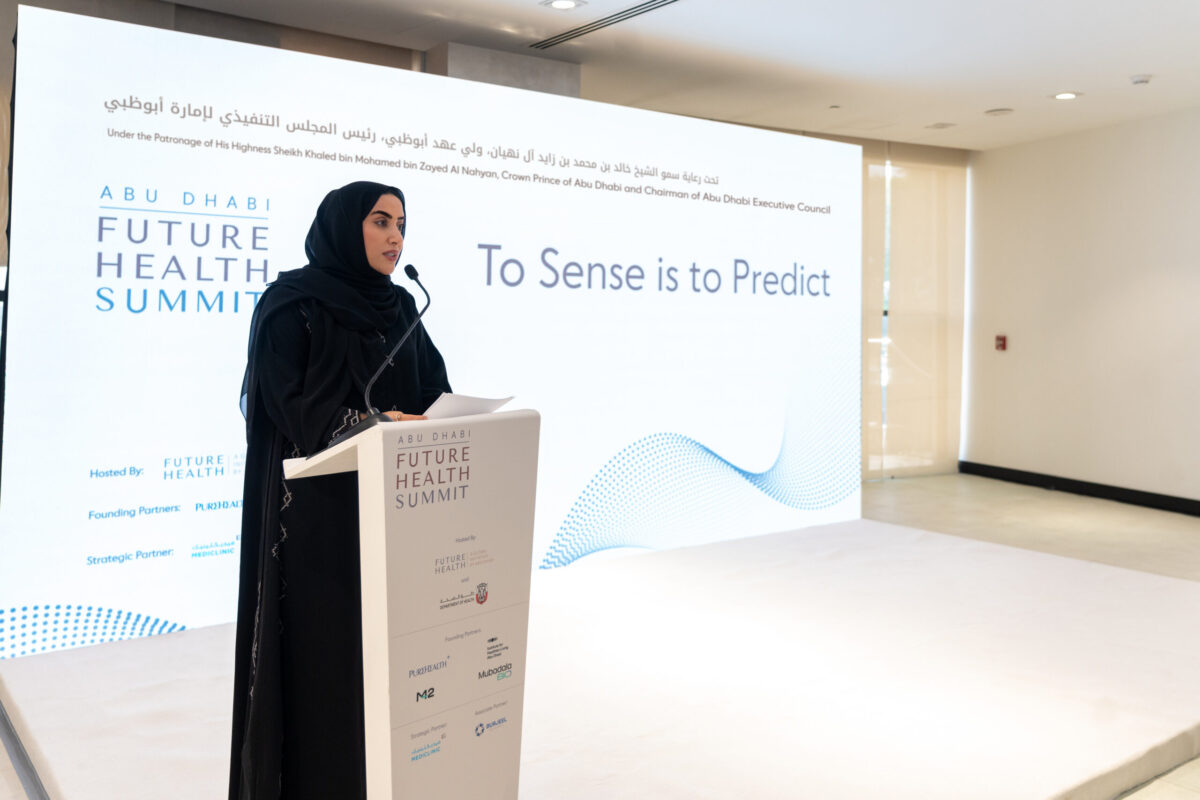
Future Health – A Global Initiative by Abu Dhabi, has revealed its 2026 theme, To Sense is to Predict, reflecting how systems are shifting towards personalised and predictive healthcare grounded in early awareness and data-led insights.

To Sense is to Predict reflects a fundamental shift in how we approach health, moving away from reactive models of care to approaches grounded in early awareness, continuous sensing, and integrated data. It frames health protection as a proactive process, where risks are identified and addressed before they escalate, to support longer, healthier lives for people everywhere.

Chronic diseases are expected to contribute 47 trillion USD in global costs by 2030, and nearly half of the world’s population lacks full access to essential health services, limiting the reach of early detection. Social-sensing and low-tech mechanisms can extend coverage and enable action where resources are limited, while high-tech sensing can identify risks before complications arise. Together these approaches can support more affordable and equitable prediction models, and help reduce avoidable costs.

His Excellency Mansoor Ibrahim Al Mansoori, Chairman of the Department of Health – Abu Dhabi, said: “By strengthening how health signals are sensed and interpreted, we can move from disease-based treatment to health-focused prevention with greater confidence, supporting more resilient systems and improved outcomes for communities around the world.”

For individuals, sensors can help to identify changes in health to delay or prevent disease. Personal wearable technology like rings, bands, or monitoring devices, and digital platforms which increasingly capture real-time physiological and behavioural data are helping to provide more usable and personalised guidance.

At the population level, sensing incorporates the detection and interpretation of physiological signals, biological markers, community behaviours, and environmental conditions that indicate changes in well-being. These signals can then inform more advanced health prediction and prevention.

“By embracing the potential of sensing technologies, Future Health places innovation in the service of humanity, enabling a future where longer, healthier lives are a reality for all.” continued Al Mansoori.

Guided by the 2026 theme, Future Health will advance a year-round program across four interconnected impact areas:

  • Longevity and Precision Medicine: Advancing personalised approaches to health by harnessing advanced diagnostics, data analytics and emerging medical technologies to address health challenges with unprecedented accuracy and support longer, healthier lives.
  • Digital Health & AI: Leveraging data-driven insights, predictive analytics and intelligent technologies to empower clinicians, policymakers, and individuals, making care more proactive, tailored, and accessible.
  • Health System Resilience & Sustainability: Strengthening health systems to maintain equity, withstand disruption, and deliver continuous, high-quality care in the face of evolving health and environmental challenges.
  • Investment in Life Sciences: Accelerating responsible innovation by supporting cutting-edge research, diagnostics and treatments that improve health outcomes while driving long-term economic growth.

Alongside its continuous program of projects, including innovation challenges, research and policy outputs, stakeholder dialogues, and impact-led projects, the Future Health Summit, its annual flagship gathering will take place later this year at ADNEC Centre Abu Dhabi, and bring global leaders together to advance dialogue, collaboration, and action.

Under the directives of Khaled bin Mohamed bin Zayed, Department of Health launches Future Health – A Global Initiative by Abu Dhabi to transform Abu Dhabi Global Health Week into a year-round global platform

Under the directives of His Highness Sheikh Khaled bin Mohamed bin Zayed Al Nahyan, Crown Prince of Abu Dhabi and Chairman of the Abu Dhabi Executive Council, Future Health – A Global Initiative by Abu Dhabi (Future Health) has been launched by the Department of Health – Abu Dhabi (DoH), marking the transformation of Abu Dhabi Global Health Week into a year-round platform of international health collaboration, action and innovation.

Representing a shift from an annual convening to a continuous, connected global ecosystem of ideas, investment and action, Future Health will come to life through initiatives including the co-creation of programmes that can test and scale solutions, research programmes to address critical needs, and regular global gatherings and dialogue sessions to build a collaborative, cross-sector approach to health solutions.

Future Health will unite leaders across policy, technology, research, philanthropy and investment to design, fund and scale solutions that shape a future where longer, healthier lives are a reality for all. The platform marks a shift beyond annual gatherings toward a continuous, connected ecosystem of ideas, investment and action, enabling sustained global collaboration and impact.

Anchored in Abu Dhabi’s leadership in healthcare innovation and artificial intelligence, Future Health will focus on four main themes: Longevity and Precision Health, Health System Resilience and Sustainability, Digital Health and AI, and Investment in Life Sciences.

Future Health will also convene its annual flagship event, the Future Health Summit in Abu Dhabi, from 7-9 April 2026 at ADNEC Centre Abu Dhabi.

Through its programmes and partnerships, Future Health will drive measurable outcomes by translating commitment into impact. The initiative will co-create and scale solutions to address pressing health challenges, conduct foresight research to identify future priorities, and facilitate regular global dialogues that foster cross-sector collaboration. It will also publish impact reports and studies that capture key developments in the global health landscape.

His Excellency Mansoor Ibrahim Al Mansoori, Chairman of the Department of Health – Abu Dhabi, said: “Future Health is a global invitation to collaborate year-round in shaping a healthier future for all. It transforms commitment into action by connecting the brightest minds and strongest partners to deliver meaningful impact for communities worldwide.

“With the world facing increasingly complex health issues, this initiative enables borderless collaboration and fosters connections around the technologies, policies and commitments needed to unlock longer, healthier lives for all.”

To translate its vision into tangible outcomes, Future Health will advance pioneering scientific projects and clinical practices in longevity medicine by integrating cutting-edge research in genomics and precision diagnostics, proactively contributing towards enhancing the span of human health.

Her Excellency Dr Noura Al Ghaithi, Undersecretary of the Department of Health – Abu Dhabi, said: “Future Health builds on Abu Dhabi’s position as a catalyst for global health progress. With advancements in genomics, AI, life sciences and precision medicine, we are shaping a model of health that is inclusive, innovative and sustainable.”

Building on the success of previous global health gatherings, Abu Dhabi has already convened more than 500 speakers from nearly 100 countries, welcomed more than 25,000 participants and launched the world’s first Declaration on Longevity and Precision Medicine. Abu Dhabi has also established one of only four global vaccine distribution hubs, strengthening equitable vaccine access and regional health security. Over the past two years, more than 50 agreements have been signed to advance clinical research, vaccine development and digital health innovation.

Founding partners of Future Health include M42, Mubadala Bio, PureHealth, and the Institute for Healthier Living Abu Dhabi (IHLAD), with Mediclinic joining as a strategic partner, and Burjeel Holdings as a thematic partner. These companies will contribute to the platform’s incubation and long-term commitments, forming the core of a diverse global coalition driving measurable health impact.


Through Future Health, Abu Dhabi is shaping a more connected and resilient global health ecosystem, driving innovation, investment and collaboration to deliver lasting impact for communities worldwide.