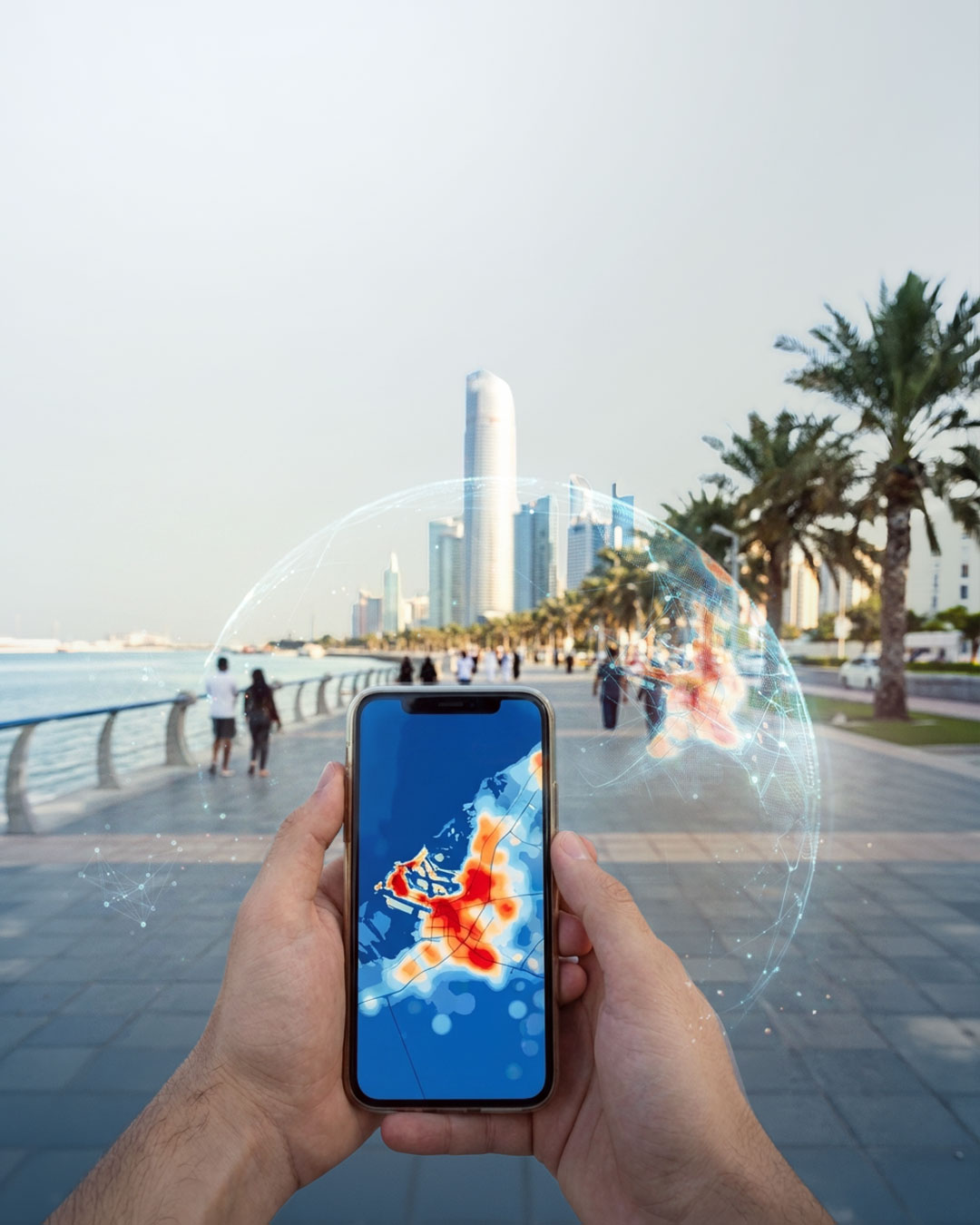
Driving the Shift to Anticipatory Health Systems


How the Future Health Challenge is accelerating population sensing
Health systems around the world are under mounting pressure from increasing rates of chronic disease, ageing populations, and limited access to early detection. Most health systems were designed for a different era, and still treat illness after it appears, leading to fewer treatment options, poorer outcomes, and higher costs for patients, providers, and national healthcare budgets.
Anticipatory health offers an alternative direction. It is designed to sense risks earlier, intervene sooner, and support prevention across systems and populations, sometimes before ill-health even appears.
This shift towards continuous monitoring and earlier insight is at the heart of Future Health – A Global Initiative by Abu Dhabi. The 2026 theme ‘To Sense is to Predict’ is demonstrated through the Future Health Challenge: Building Anticipatory Health Systems through Population Sensing, developed in collaboration with MIT Solve.
Why Now
Health systems around the world are under growing strain. Chronic diseases account for the majority of global deaths and are projected to contribute trillions of dollars in economic costs by 2030 (Hacker, 2024). At the same time, demographic change continues to accelerate demand. By 2030, one in six people worldwide will be over the age of 60 (WHO, 2025), meaning more people will need ongoing treatment and support if we don’t act now.
Even with transformative progress in medical science, many health systems still focus on treating problems late rather than preventing them. Information is often scattered across different providers and regions, limiting its ability to inform timely decision making. As a result, early warning signs are missed, care is less effective, and pressure on the system continues to grow.
Catching health issues early and preventing them leads to better results and lower costs for everyone. The challenge now is scaling this across entire populations and embedding it into routine care across entire populations.
The Potential of Population Sensing
Population sensing helps health systems keep a continuous, big-picture view of health risks by combining different types of data. These can include clinical data, diagnostic results, environmental indicators, and digital health inputs. When analysed together, this information shows patterns and trends across whole communities, not just individual patient visits.
This approach helps spot risks earlier, predict system pressures, and enable earlier and more accurate responses. It works across individual and population levels, strengthening preventive care while helping guide public health planning, policy decisions, and how resources are used.
Many population sensing approaches focus on unlocking value from data that already exists, using tools like advanced analytics and AI. When applied effectively, this helps build systems that are more responsive, resilient, and prevention-oriented, with forward-looking insight built into everyday decisions.
From Sensing to Prediction
By using signals from the body, community behaviour, and the environment, population sensing makes it easier to see what is coming, supporting better prediction, prevention, and timely action.
Launched in February 2026, the Challenge is a key way Future Health is advancing the shift towards more predictive, anticipatory models of care. It creates a platform to identify both simple and advanced solutions that help health systems detect risks earlier and prepare for change, using signals from physiology, behaviour, and the environment.
With 393 applications from 68 countries, the volume and diversity reflect the growing global momentum towards predictive and preventive healthcare. They also show an increasing use of complex data to generate practical insights that can work across a variety of health system settings.
The selected finalists reflect the breadth of innovation shaping the future of anticipatory health, spanning five continents and a mix of scalable approaches have been announced, and include:
- SOIK Corporation (Japan), SPAQ, a community-led model using AI to detect maternal risk in fragile settings
- Huna (Brazil), Huna Cancer Navigator, applying AI to routine blood data to support early cancer detection and patient engagement
- ThinkMD (Australia), a digital platform enabling better frontline care and generating real-time public health intelligence
- Vector Control Innovations (United States), VectorCam, an AI-enabled mosquito surveillance system supporting predictive response in low-resource settings
- Arkangel AI (Colombia), Unread Signal, software transforming clinical notes into early warning signals
Looking Ahead
As demand and global pressures grow, the ability to anticipate health risks earlier will become increasingly important. Population sensing supports this shift towards more predictive and personalised care, enabling earlier insight, faster and more targeted interventions, and more sustainable use of healthcare resources over time.
Through its focus on anticipatory health systems, Future Health is helping to shape a new direction for how health systems sense, plan, and respond, with prevention and early action built into how care is designed.
By working with partners and investing in innovation, Future Health is helping turn data into practical action and more proactive care, improving health for families today and for generations to come.