Join us at Abu Dhabi Future Health Summit 20-22 October 2026

From Sensing to Action: What the Future Health Challenge reveals about Global Priorities

The pressures shaping health systems are increasingly global, but their effects are deeply local. While advances in data and technology are creating new opportunities to sense risk earlier, their impact depends on how effectively they respond to local realities, from infrastructure and workforce capacity to access and community needs.

This is especially important for prevention. Conditions that could often be detected or managed earlier are still identified too late, reducing treatment options, increasing costs, and leading to poorer outcomes for patients and health systems alike. Improving prevention requires more than better technology. It requires solutions that can turn early insight into timely action within the environments where people actually receive care.

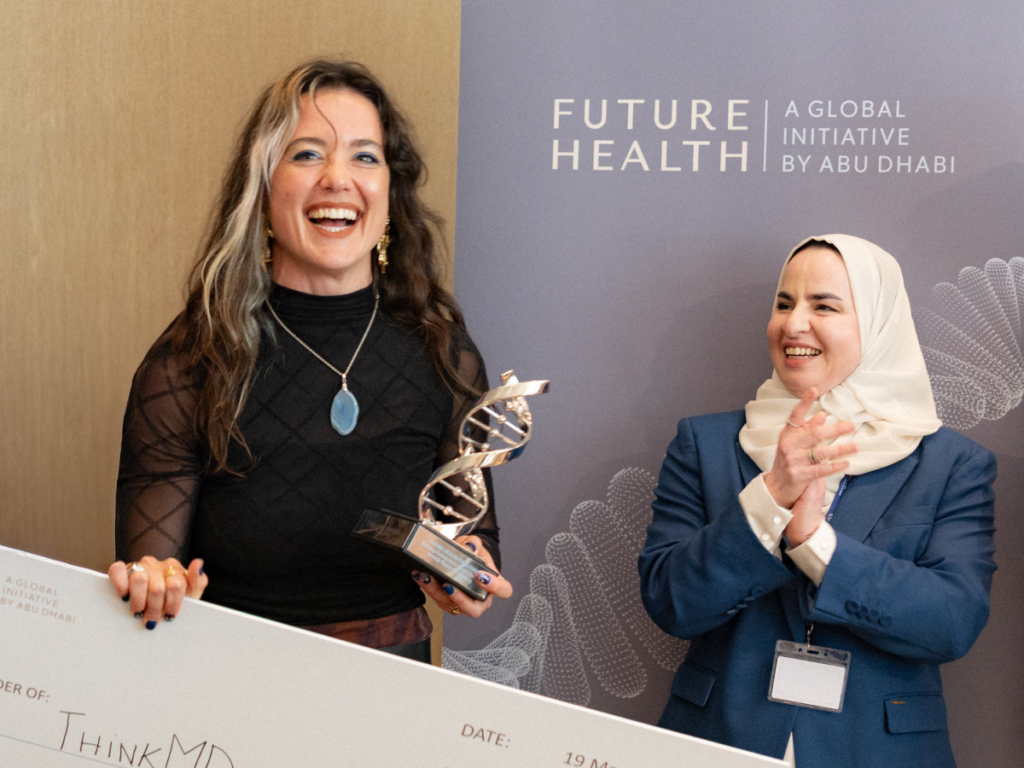
Announced at the 79th World Health Assembly in Geneva, the winners of the Future Health Challenge 2026: Building Anticipatory Health Systems through Population Sensing demonstrate a growing global effort to make detection, prevention and proactive care more accessible. Selected from 393 submissions across 68 countries, the winning teams were recognised for solutions that strengthen early detection, improve understanding of population health, and support more effective system-level decision-making.

  • ThinkMD, Winner
    In many underserved communities, access to quality care depends heavily on frontline providers such as nurses, pharmacists and community health workers, often operating with limited training or diagnostic support. ThinkMD strengthens these frontline interactions through an offline clinical guidance platform that supports more consistent decision-making while generating real-time population health insights. By functioning in low-connectivity environments and aligning with local clinical protocols, the solution helps expand access to earlier detection and more reliable care.
  • Vector Control Innovations – VectorCam, Distinguished Finalist
    In many malaria-endemic regions, access to entomological expertise and timely surveillance data is concentrated in urban centres, leaving some of the highest-risk communities underrepresented in national decision-making. Designed for low- resource environments, VectorCam enables community health workers to collect real-time mosquito surveillance data using offline AI tools. By shifting surveillance closer to the community level, the solution helps health authorities identify local transmission risks earlier and target interventions more equitably and effectively.
  • Huna – Huna Cancer Navigator, Distinguished Finalist
    Developed within Brazil’s multilayered healthcare landscape, Huna uses routine blood test data already generated by health systems to identify people at elevated risk of cancer without requiring new infrastructure or specialist diagnostics. By combining AI-powered triage with digital care coordination, the platform helps make existing screening pathways more targeted and accessible.

Together, these solutions reflect a growing global shift towards earlier detection, prevention and proactive care. While developed in very different healthcare environments, each demonstrates how locally grounded innovation can help health systems move from reacting to illness towards anticipating risk earlier, with benefits that can extend well beyond the geography of implementation.

Delivered by Future Health – A Global Initiative by Abu Dhabi, in collaboration with MIT Solve, the Challenge was designed to surface innovations that help to strengthen how early population-level signals are identified, interpreted and acted on, supporting earlier intervention and more effective allocation of resources.

At the heart of the Challenge is an expanded understanding of sensing itself. Early warning signals may come from a range of sources such as routine diagnostics, frontline consultations, community-level monitoring, environmental shifts or population trends. This broader view reflects an evolving approach to prevention, one that begins long before individuals engage with formal health services.

The range of solutions recognised at the World Health Assembly highlight how anticipatory healthcare can be adapted across different operating environments. What connects them is a shared focus on making insight usable, drawing from different types of locally available data and embedding insight within existing models of care, rather than imposing one-size- fits-all approaches. This approach helps build systems that are more responsive, prevention- oriented, and better equipped to support specific population needs.

Taken together, the winners of the Future Health Challenge 2026: Building Anticipatory Health Systems through Population Sensing showcase an emerging global consensus towards supporting better prediction, prevention, and timely action. By adapting to local needs while addressing shared global pressures, these solutions demonstrate how health systems around the world can move from reaction to readiness.

The challenge now is to continue learning from how these approaches are applied, refined and scaled across varied settings, to support healthier and more resilient populations worldwide.

Through Future Health, the selected innovators will engage with policymakers, investors, and health leaders ahead of the Abu Dhabi Future Health Summit from 20 to 22 October 2026, supporting the next phase of development, collaboration, and adoption.

Meet the Future Health Challenge Finalists Using Population Sensing to Predict and Prevent Disease Earlier

Chronic diseases are projected to generate trillions in global economic costs by 2030. Yet across many health systems, critical data arrives too late to influence outcomes. By the time patterns are detected, disease has progressed, costs have risen, and opportunities for prevention are limited.

The Future Health Challenge 2026: Building Anticipatory Health Systems through Population Sensing, launched by Future Health – A Global Initiative by Abu Dhabi in collaboration with MIT Solve, was created to accelerate the use of real-time data in detecting risk earlier and improving population-level health outcomes.

Selected from 393 submissions across 68 countries, the finalists reflect a shared ambition: to turn health data into early warnings that improve decision-making. Their solutions span diverse settings, from low-resource environments to advanced digital infrastructures, while addressing another critical gap: accessibility to prevention.

The five finalist teams will present their solutions during a live pitching session at the 79th World Health Assembly in Geneva, Switzerland, competing for a USD 200,000 grand prize and two USD 50,000 distinguished finalists awards:

  • Vector Control Innovations (United States)
    Predicting vector-borne disease through real-time mosquito surveillance
    Vector-borne diseases affect more than half of the world’s population, account for over 17% of all infectious diseases, and cause around one billion infections each year, yet many health systems still lack timely visibility into mosquito populations. VectorCam uses offline, on-device AI to identify mosquito species in the field, enabling real-time, localised surveillance before disease transmission occurs. Deployed across multiple countries, including Uganda, Ghana and Kenya, the system has improved data completeness and reporting speed, with evaluations showing data completeness increasing from around 60% to over 90%.
  • ThinkMD (Australia)
    Generating real-time population health insights from frontline care
    With a projected global shortage of 15 million healthcare workers by 2030, many low- resource communities rely on frontline providers with limited training, supervision, or diagnostic tools, contributing to missed or delayed diagnoses. ThinkMD’s mobile platform supports these providers by guiding them through WHO-aligned clinical assessments, functioning fully offline. Each consultation generates structured data, creating a broader population sensing layer that enables health ministries to track disease patterns and service demand. The platform is already in use by more than 9,000 frontline workers across 885 facilities across Africa and the Pacific. ThinkMD’s platform is contributing to more anticipatory system-level decision-making – already demonstrating its effectiveness in detecting symptom patterns months before a cholera outbreak.
  • Huna (Brazil)
    Using routine blood tests to support early cancer detection and patient engagement
    Cancer is projected to impose a $25 trillion economic burden on the global economy by 2050, driven largely by late diagnosis. Huna is rethinking how cancer is detected by focusing on what health systems already produce every day: routine blood exams. Its platform analyses routine blood exam data, such as complete blood counts, to identify subtle risk signals associated with early-stage cancer. The solution combines AI-powered risk triage with a digital navigation layer that ensures people identified as high-risk are guided through appropriate screening and diagnostic pathways. Deployed across public and private healthcare settings in Brazil, Huna’s pilots have screened more than 500,000 patients and detected hundreds of cancer cases, showing that population-level sensing can dramatically improve screening efficiency and shift diagnoses towards earlier, less costly stages of disease, without requiring new infrastructure.
  • SOIK Corporation (Japan)
    Safeguarding maternal health in fragile settings
    An estimated 260,000 women die annually from pregnancy-related causes, with 72% occurring in Sub-Saharan Africa, often due to preventable complications and limited access to timely care. SOIK Corporation’s SPAQ platform is designed for use in low-resource and fragile settings, enabling a single midwife to conduct a complete antenatal consultation using a smartphone, integrating records, screening, risk assessment and referral into one offline workflow. By operating at both community and facility level, SPAQ captures signals such as undetected pregnancies and unmanaged hypertension before they become emergencies. The platform is currently deployed across several countries, having supported more than 25,000 structured antenatal screenings in approximately 50 facilities across four countries and has plans to expand its service to 500 facilities, with a potential reach of more than 600,000 pregnant women each year. Through government partnerships, SOIK is converting early detection into tracked interventions – a core principle of anticipatory health systems.
  • Arkangel AI (Colombia)
    Transforming the intelligence hidden in clinical text into early warning signals
    Up to 80% of clinically relevant information is captured in unstructured formats, but is rarely analysed at scale. Most health systems rely on structured data which often reflect disease only after it has progressed. Arkangel addresses this gap by analysing unstructured clinical notes at scale, extracting early risk signals and disease trajectories that conventional coding-based systems overlook. By converting clinical narratives into structured, actionable insights, the platform enables health systems to identify emerging risks 6 – 12 months earlier than traditional approaches. Operating across more than 300 hospitals in 11 countries, Arkangel makes clinical narratives readable as system-level signals, supporting earlier intervention for chronic and underdiagnosed conditions, particularly in fragmented health systems.

Building the next generation of anticipatory health systems
Together, these finalists show how earlier detection of health risks can be achieved for real- world impact using data that already exists in health systems and communities. Their approaches demonstrate how routine data can be analysed and used in time to inform decisions, improving prevention, diagnosis and resource allocation across different healthcare settings.

Whether through community surveillance, frontline care, routine diagnostics or clinical text, each finalist expands what health systems can detect and how early they can respond. The Challenge provides a platform to support them in further testing, validating and scaling their solutions across health systems, with the aim of moving from pilot use to broader implementation.

Attendees at the Abu Dhabi Future Health Summit (20 to 22 October 2026) will also have access to see the innovations and hear from the teams, with Semi-finalists and selected Honourable Mention teams invited to showcase their innovations in Abu Dhabi.

From Healthcare to Healthspan: Why Predictive, Personalised Care Will Define the Next Era of Global Health

Dr Asma Al Mannaei, Executive Director,
Health Life Sciences Sector for the Department of Health – Abu Dhabi

Health systems around the world are facing mounting pressure from ageing populations, rising chronic disease and the growing cost of care. Yet most healthcare models remain focused on treating illness after it appears rather than preventing it before it develops. The real challenge today is no longer simply extending life, but ensuring those additional years are lived in good health.

This demands a global shift in how policymakers, investors, innovators, practitioners – and even individuals – define and measure health. The focus is moving beyond longevity alone towards how long people remain healthy, productive, and independent. Precision medicine is making this transition possible. Advances in genomic science, data analytics and early detection are allowing risks to be identified earlier and interventions tailored with far greater accuracy.

The impact of this shift is already visible in the UAE. National genomics initiatives such as the Emirati Genome Program are helping identify hereditary disease risks earlier, allowing preventative interventions before symptoms emerge. In Abu Dhabi, platforms such as Malaffi, the emirate’s health information exchange, enable clinicians to access longitudinal patient data, improving diagnosis accuracy and reducing unnecessary repeat testing. These initiatives demonstrate how predictive, personalised care can deliver tangible benefits for both patients and health systems.

This priority is reflected in the 2025 Declaration on Longevity and Precision Medicine launched at Abu Dhabi Global Health Week, which brought together international stakeholders around a shared ambition to advance preventative and personalised healthcare. Since then, initiatives aligned with the Declaration’s priorities are progressing in areas such as early detection, advanced screening, and personalised care pathways, demonstrating how coordinated action can help translate ambition into execution.

Abu Dhabi provides a natural home for this work. Through significant investment in health innovation, national genomics programmes and integrated health data infrastructure, the emirate is a global hub for preventive healthcare innovation. Its ability to connect policy objectives, scientific capability, and healthcare delivery has created a model that can be adapted and scaled globally.

Reflecting a growing demand for personalised healthcare and continued investment in next-generation health technologies, the UAE’s longevity market is forecast to grow from $19 billion in 2020 to $32 billion by 2026. Behind these figures is a broader transformation towards intelligent health ecosystems that connect data, research, and policy to support better population health outcomes.

Future Health – A Global Initiative by Abu Dhabi is positioned within a broader global shift towards predictive, personalised health systems that prioritise healthspan over episodic care. As countries and health systems navigate the transition from treatment-led models to prevention-driven ecosystems, Future Health acts as a platform to align policy, data, science and investment around scalable implementation. By convening global expertise and enabling targeted, impact-driven collaborations, it supports the integration of genomics, advanced analytics and AI into real-world care delivery. Anchored in Abu Dhabi’s integrated health and data infrastructure, the initiative serves as a testbed for innovation while contributing to globally relevant models that translate scientific progress into measurable population health outcomes.  

Health systems of the future must embed predictive and personalised healthcare models at all levels. This requires connected data infrastructure, clinical decision support tools, and policy frameworks that reward prevention over intervention. Our greatest opportunity to create healthier global societies lies not in treating disease faster, but in preventing it earlier.

Extending healthspan, the time a person spends in good health, represents one of the defining health and economic challenges of the coming decades, shaping not only direct individual and national health, but will shape workforce productivity, economic resilience, and quality of life across societies. Future Health is taking on this critical role to bring together the stakeholders needed to move from strategy to implementation, helping to ensure that innovation translates into measurable health impact for all.

Future Health invites policymakers, healthcare leaders, researchers and innovators to join this growing global community and help accelerate the transition towards predictive, personalised healthcare systems capable of delivering longer, healthier lives and more resilient health systems worldwide.

Originally published in Gulf News. Read the original article here.

Driving the Shift to Anticipatory Health Systems

How the Future Health Challenge is accelerating population sensing

Health systems around the world are under mounting pressure from increasing rates of chronic disease, ageing populations, and limited access to early detection. Most health systems were designed for a different era, and still treat illness after it appears, leading to fewer treatment options, poorer outcomes, and higher costs for patients, providers, and national healthcare budgets.

Anticipatory health offers an alternative direction. It is designed to sense risks earlier, intervene sooner, and support prevention across systems and populations, sometimes before ill-health even appears.

This shift towards continuous monitoring and earlier insight is at the heart of Future Health – A Global Initiative by Abu Dhabi. The 2026 theme ‘To Sense is to Predict’ is demonstrated through the Future Health Challenge: Building Anticipatory Health Systems through Population Sensing, developed in collaboration with MIT Solve.

Why Now

Health systems around the world are under growing strain. Chronic diseases account for the majority of global deaths and are projected to contribute trillions of dollars in economic costs by 2030 (Hacker, 2024). At the same time, demographic change continues to accelerate demand. By 2030, one in six people worldwide will be over the age of 60 (WHO, 2025), meaning more people will need ongoing treatment and support if we don’t act now.

Even with transformative progress in medical science, many health systems still focus on treating problems late rather than preventing them. Information is often scattered across different providers and regions, limiting its ability to inform timely decision making. As a result, early warning signs are missed, care is less effective, and pressure on the system continues to grow.

Catching health issues early and preventing them leads to better results and lower costs for everyone. The challenge now is scaling this across entire populations and embedding it into routine care across entire populations.

The Potential of Population Sensing

Population sensing helps health systems keep a continuous, big-picture view of health risks by combining different types of data. These can include clinical data, diagnostic results, environmental indicators, and digital health inputs. When analysed together, this information shows patterns and trends across whole communities, not just individual patient visits.

This approach helps spot risks earlier, predict system pressures, and enable earlier and more accurate responses. It works across individual and population levels, strengthening preventive care while helping guide public health planning, policy decisions, and how resources are used.

Many population sensing approaches focus on unlocking value from data that already exists, using tools like advanced analytics and AI. When applied effectively, this helps build systems that are more responsive, resilient, and prevention-oriented, with forward-looking insight built into everyday decisions.

From Sensing to Prediction

By using signals from the body, community behaviour, and the environment, population sensing makes it easier to see what is coming, supporting better prediction, prevention, and timely action.

Launched in February 2026, the Challenge is a key way Future Health is advancing the shift towards more predictive, anticipatory models of care. It creates a platform to identify both simple and advanced solutions that help health systems detect risks earlier and prepare for change, using signals from physiology, behaviour, and the environment.

With 393 applications from 68 countries, the volume and diversity reflect the growing global momentum towards predictive and preventive healthcare. They also show an increasing use of complex data to generate practical insights that can work across a variety of health system settings.

The selected finalists reflect the breadth of innovation shaping the future of anticipatory health, spanning five continents and a mix of scalable approaches have been announced, and include:

  • SOIK Corporation (Japan), SPAQ, a community-led model using AI to detect maternal risk in fragile settings
  • Huna (Brazil), Huna Cancer Navigator, applying AI to routine blood data to support early cancer detection and patient engagement
  • ThinkMD (Australia), a digital platform enabling better frontline care and generating real-time public health intelligence
  • Vector Control Innovations (United States), VectorCam, an AI-enabled mosquito surveillance system supporting predictive response in low-resource settings
  • Arkangel AI (Colombia), Unread Signal, software transforming clinical notes into early warning signals

Looking Ahead

As demand and global pressures grow, the ability to anticipate health risks earlier will become increasingly important. Population sensing supports this shift towards more predictive and personalised care, enabling earlier insight, faster and more targeted interventions, and more sustainable use of healthcare resources over time.

Through its focus on anticipatory health systems, Future Health is helping to shape a new direction for how health systems sense, plan, and respond, with prevention and early action built into how care is designed.

By working with partners and investing in innovation, Future Health is helping turn data into practical action and more proactive care, improving health for families today and for generations to come.